

Manual loading, case packing, and palletizing slow your line and make hiring harder every month. This packaging robotics integration guide shows which stations deserve a robot and how to connect one to the line.
A packaging robot is a work cell built from a robot arm, a gripper, vision sensors, and a PLC. The arm moves the product, the gripper holds it, and vision checks each pack. The PLC links the cell to the line, so the robot and the line act as one system.
Match the arm to the task before you order any hardware. Six-axis arms suit varied angles, and SCARA arms suit fast flat moves. Delta arms suit light high-speed picks, and collaborative arms suit shared workspaces.
A typical example model handles 20 kilograms, reaches 1.8 meters, and repeats within plus or minus 0.05 millimeters. That payload includes the gripper, so count the tool weight first. Repeatability does not equal absolute accuracy, so test the real pick point before ordering. Packaging robotics integration starts with this check, not with a purchase order.
Start with the station that fails the manual test. Check each station against four tests, and rank the worst one first.
A station fails the test when it repeats one motion all shift. For example, a six-axis robot lifts products from a conveyor and places each one into a tray or carton. You set the pick point once, and the robot repeats that motion with steady precision.
A station fails the test when it lifts heavy cases all day. For example, a palletizing robot stacks full cases in a stable pattern, and the arm reaches across the pallet. Operators stay clear of heavy lifting, so lifting injuries fall.
A station fails the test when slow manual work caps line output. The filler waits for hands to catch up, and the whole line slows with it. A robot removes that bottleneck, so the filler no longer waits.
A station fails the test when hiring stays hard month after month. A robot takes the station, and operators move to supervision and quality checks. Hiring pressure falls when fewer hands must cover the hard stations.
For example, a loading station with heavy cases and slow manual picks fails three tests at once. Put that station first. A light packing station with steady manual output fails none, so it waits. Measure the return on the first station before you add the next one.
A six-axis robot lifts products from a conveyor and places each one into a tray or carton. First, watch manual picking for one shift and note where output drops. You set the pick point once, and the robot repeats that motion with steady precision.
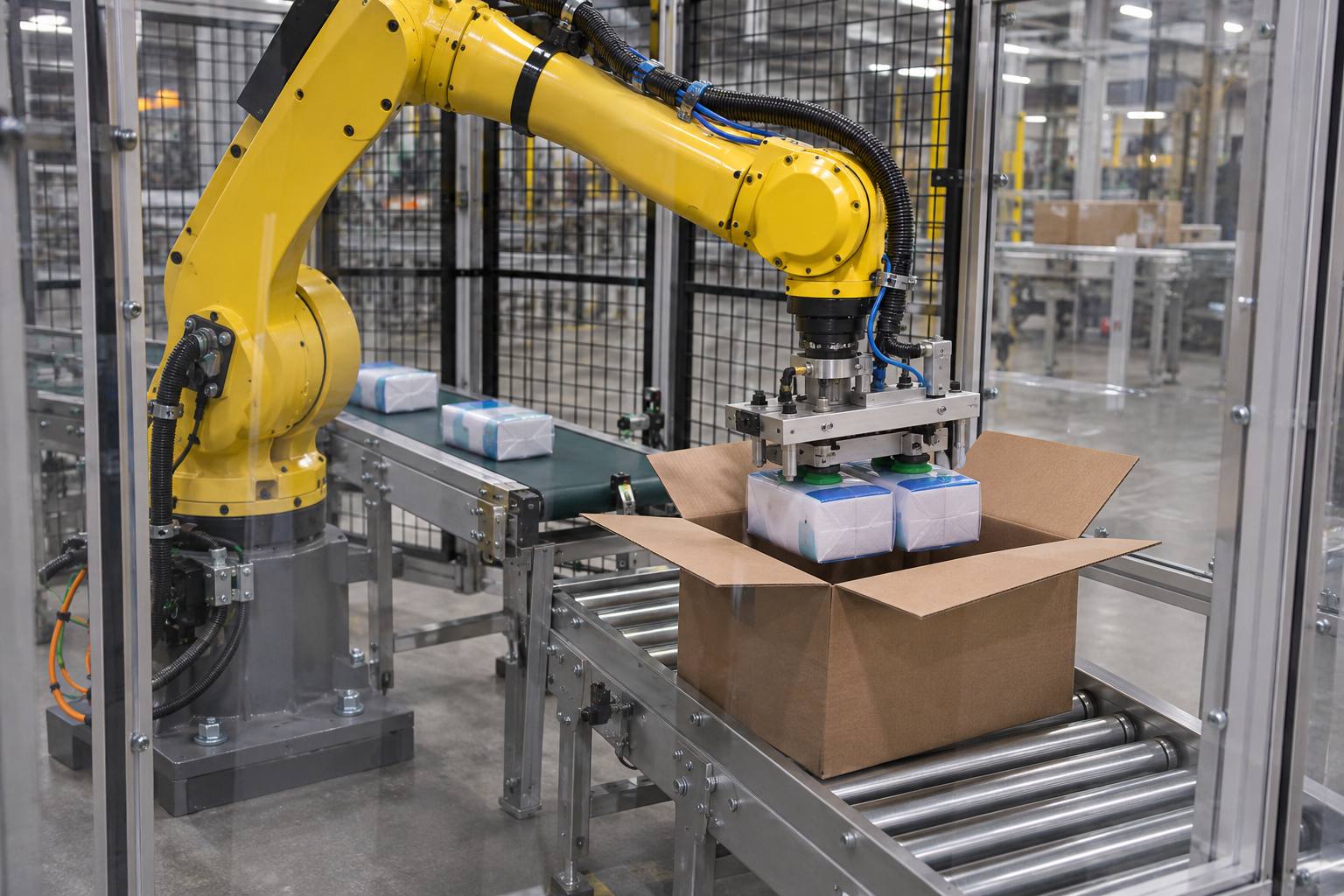
A robot folds each carton, loads the filled packs, and seals the case without stopping the line. Next, check each case with vision sensors before the sealer closes the flaps. Packaging robotics integration links this cell to the filler upstream, so the pace stays matched.
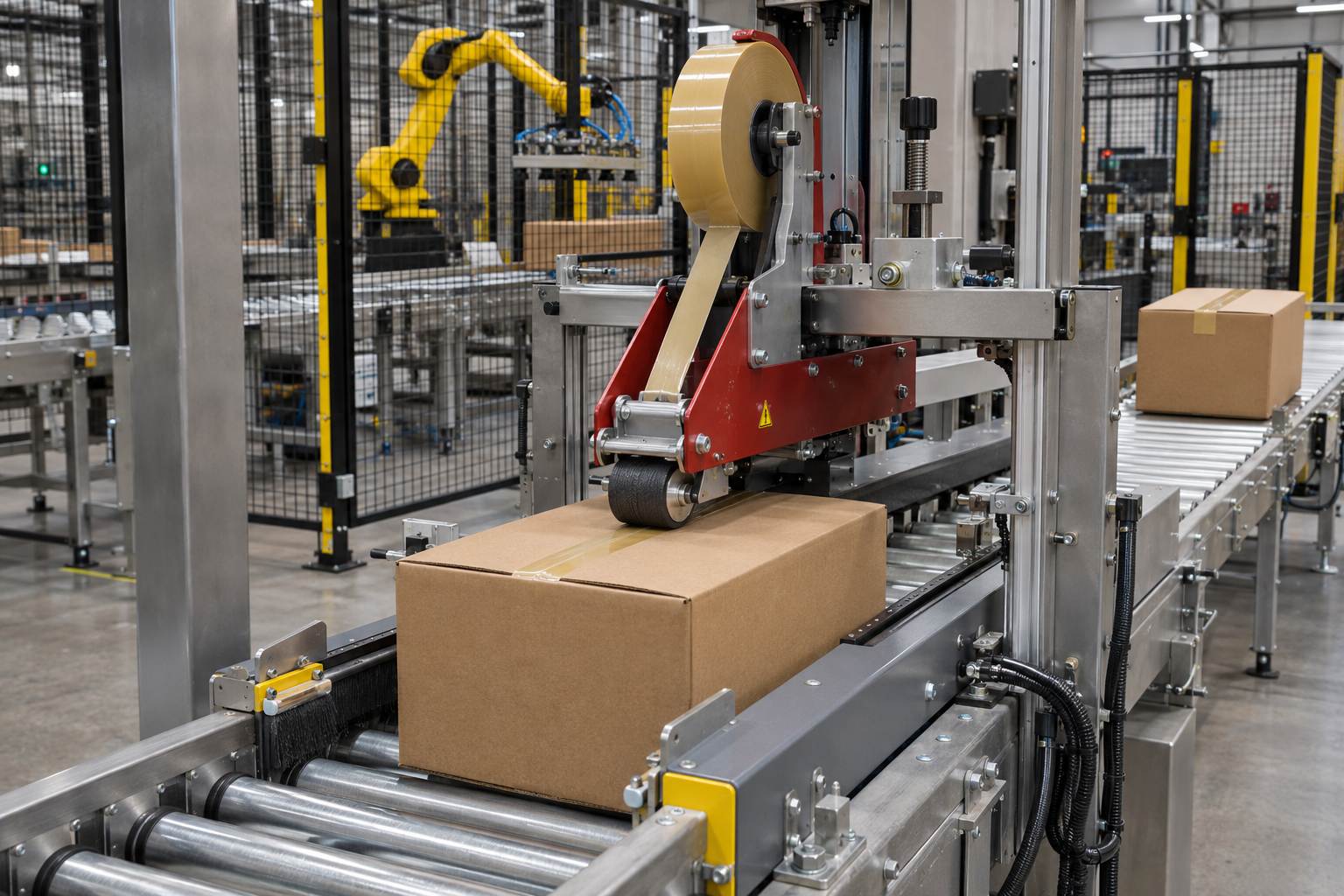
A palletizing robot stacks full cases in a stable pattern and keeps each layer aligned. The arm reaches across the pallet, so operators stay clear of heavy lifting all day. You change the stacking pattern by loading a new recipe, not by rebuilding the cell.
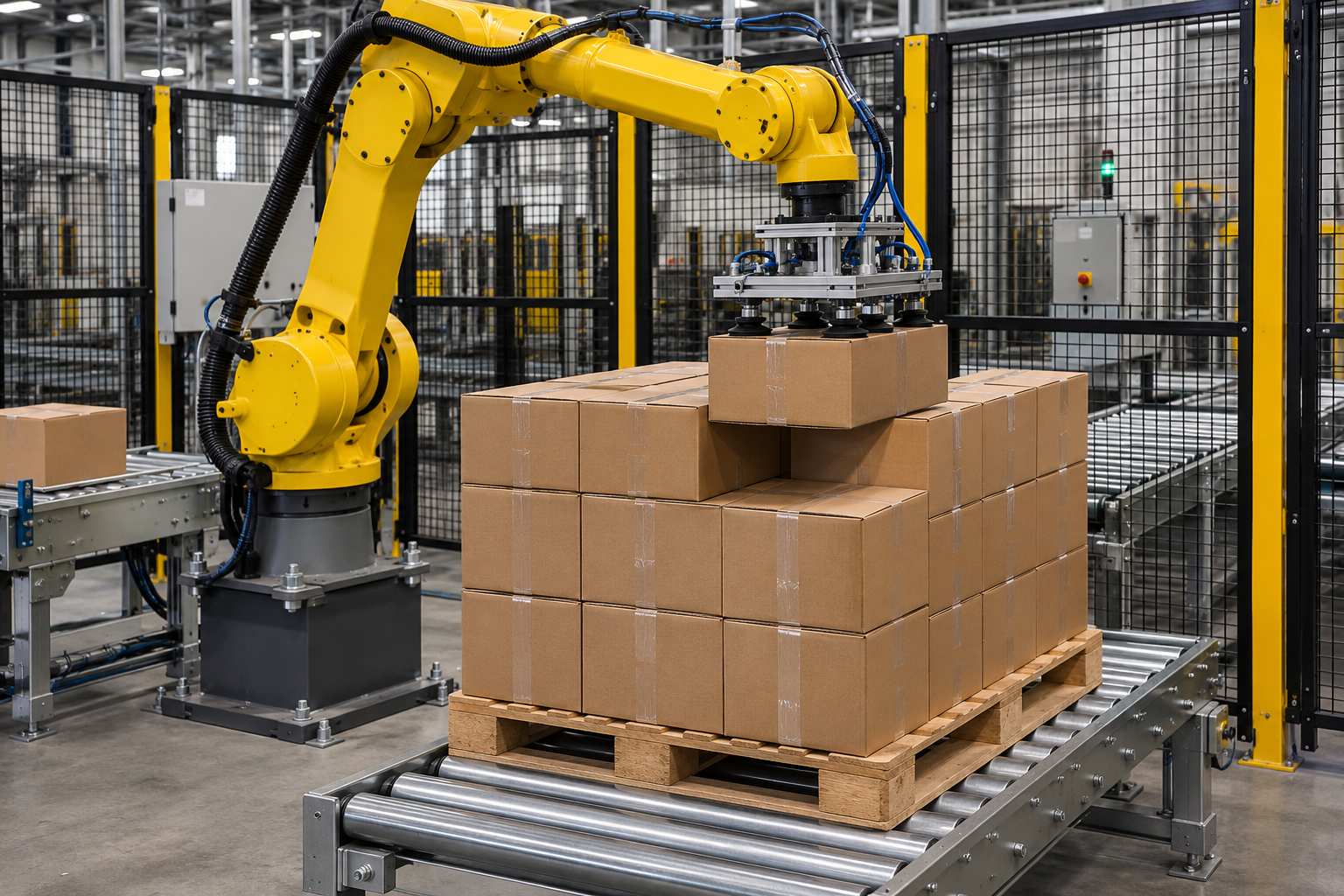
A robot repeats the same motion at the same pace, shift after shift. Packaging robotics integration removes the slow manual stations that cap output. For your line, this means the filler no longer waits for hands to catch up.
Fewer hands touch each pack when robots take the loading, packing, and stacking stations. Operators move to supervision and quality checks instead of heavy lifting all day. For your line, this means fewer injuries from lifting and less pressure when hiring is hard.
Robot cycles stay steady, so the line stops less for fatigue and handovers. Vision checks catch missing packs before sealing, so bad cases never reach the pallet. For your line, this means more good packs per shift and fewer rework hours.
Quick-change grippers swap in minutes, and no tools slow the switch between products. The touchscreen stores each recipe, so sealing, speed, and positions return with one tap. Load the recipe, run a small test batch, and check the packs before full speed returns. For your line, this means short runs stay profitable instead of losing hours to changeover.
Count the full cost before you connect, not after the robot arrives. List labor saved, then add maintenance, spares, and training beside those savings. Return on investment equals net savings divided by initial investment, multiplied by 100. A typical example shows 40,000 dollars of net savings on a 100,000 dollar investment, which gives 40 percent.
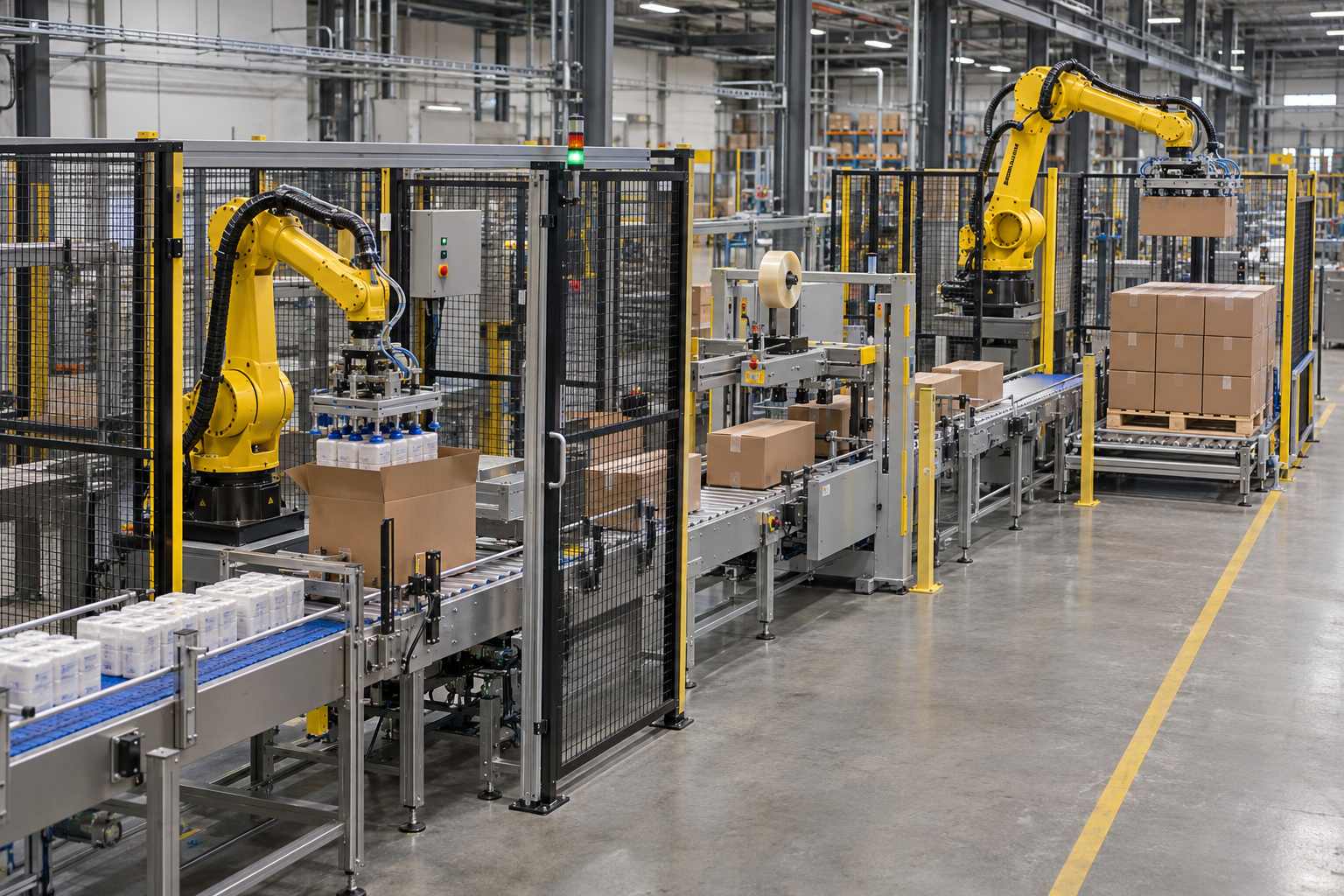
A sound connection starts with an audit, not with hardware. Check conveyor speed, PLC model, signal points, floor space, and safety distance first. You move on only when that audit list is complete and signed off.
Next, dock the conveyor to the robot cell and fix the pick and place positions. Fit the gripper to the real product, and check load and reach against the cell layout. Packaging robotics integration fails at this step when the gripper slips or the reach falls short.
Then wire the handshake: start, stop, and fault signals between robot and line. Test each signal one by one, and confirm the line and the robot stop together on a fault. You pass this step only when every signal on the list answers correctly.
Safety fencing and interlocked gates guard the cell, and the gate stops the robot when opened. ISO 10218 and ISO/TS 15066 set the safety rules for robot systems and human-robot work. These are safety standards, not LINK product certificates, and LINK machines carry CE and RoHS. Packaging robotics integration stays safe only when these rules shape the layout.
Finally, run a small trial batch before full production starts. Check every pack for missed picks, weak seals, and jams, and fix each fault at once. You move to full production only when the trial batch runs clean from start to finish.
Packaging robotics integration turns slow manual stations into a steady automated line. Start with one high-value station, connect it safely, and measure the return. LINK builds packaging machines to fit the line — send product details and target output for a tailored plan.
1. Can packaging robotics integration connect to an old packaging line?
A typical retrofit links the robot to the existing conveyor and PLC. A standard cell connects in 2 to 5 days, with no full rebuild of the line.
2. How long does a packaging robotics integration changeover take?
A typical recipe change takes 5 to 15 minutes with quick-change grippers. A full format change takes 30 to 60 minutes when new tooling is fitted.
3. What safety fencing does packaging robotics integration require?
A typical cell uses fencing about 1.8 meters high with interlocked gates. The robot stops in under 1 second after a gate opens during production.
4. How many stations can one robot serve in packaging robotics integration?
One robot typically serves 2 to 3 nearby stations with a rotary table. Beyond 3 stations, cycle time rises and a second robot pays off faster.
5. Is packaging robotics integration worth it for small batches?
For example, batches of 500 to 2,000 packs suit a robot cell well. Below 500 packs, manual loading often costs less than a robot cell.
6. How is a palletizer selected for packaging robotics integration?
Match the palletizer to case weight, pallet size, and target speed first. A typical example stacks 10-kilogram cases at 8 to 12 cases per minute.

E-mail : Molly@xmlk-machine.com
Envoyez-nous un email
Room 810, No. 35-2 Xinjing Road, Haicang, Xiamen, Fujian, China
Notre adresse
Tél : +86 18150150881
Whatsapp : +8618150150881
appelez-nous


 français
 English
 português
 ไทย
