

A pet food brand can fail before it reaches the shelf. A weak seal or a torn bag costs a new brand its first customer.
This guide shows you pet food packaging solutions that take your brand from product form to first production.
Your product form decides your pack, your machine, and your shelf life. Dry, freeze-dried, and wet foods need different pet food packaging solutions.
Dry kibble and treats usually hold less than 10% moisture, so the pack must block moisture and oxygen. A multi-layer bag with a moisture barrier keeps kibble crisp for months. Treats in small packs also need a seal that survives handling and transport.
Freeze-dried food is light, fragile, and quick to absorb moisture. A crushed piece loses its shape, so the pack needs cushioning and a strong seal. A rigid pouch or a bag with a nitrogen flush protects texture and freshness.
Wet food needs an anaerobic pack, because air and microbes spoil it fast. Retort pouches, cans, and trays all lock out air and survive heat sterilization. A can line costs more to start, but it gives the longest shelf life.
Your pack format is the first thing a buyer sees. Pet food packaging solutions must protect the food, fit your price, and stand out on the shelf.
A pillow bag is the lowest-cost pack for dry food in large sizes. A VFFS machine forms it from roll film, so unit cost stays low at volume. The trade-off is a flat look with no reseal, so it suits value brands best.
A stand-up zipper bag gives a premium look and a reseal your customer uses every day. It holds its shape on the shelf and keeps food fresh after opening. A premade pouch machine fills it, which costs more per bag than roll film.
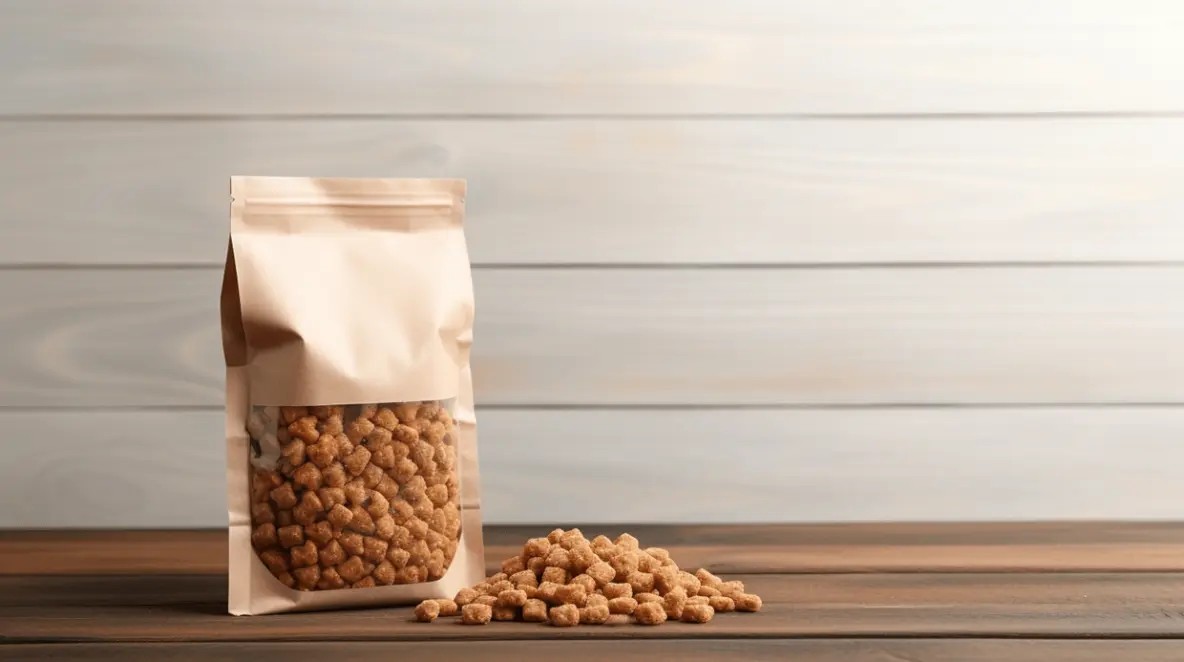
Cans and trays suit wet food and premium single-serve portions. A can protects food for years, and a tray shows the product through a clear lid. Both need a canning or tray-sealing line, so start-up cost runs higher.
A starter brand does not need a full line on day one. The right pet food packaging solutions match the machine to your first order, then scale when sales prove the demand.
A semi-automatic VFFS is the usual first machine for dry pet food. An operator loads the film and the machine forms, fills, and seals each bag. A typical starter unit runs 10–30 bags per minute, which covers a first production run.
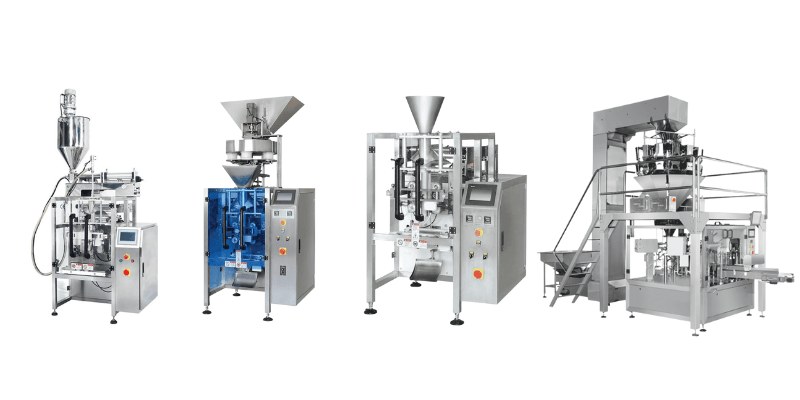
A premade pouch machine takes ready-made bags and fills them one by one. It gives a better bag shape and a zipper seal, which suits premium brands. Changeover takes longer than roll film, so it fits short runs of several recipes.
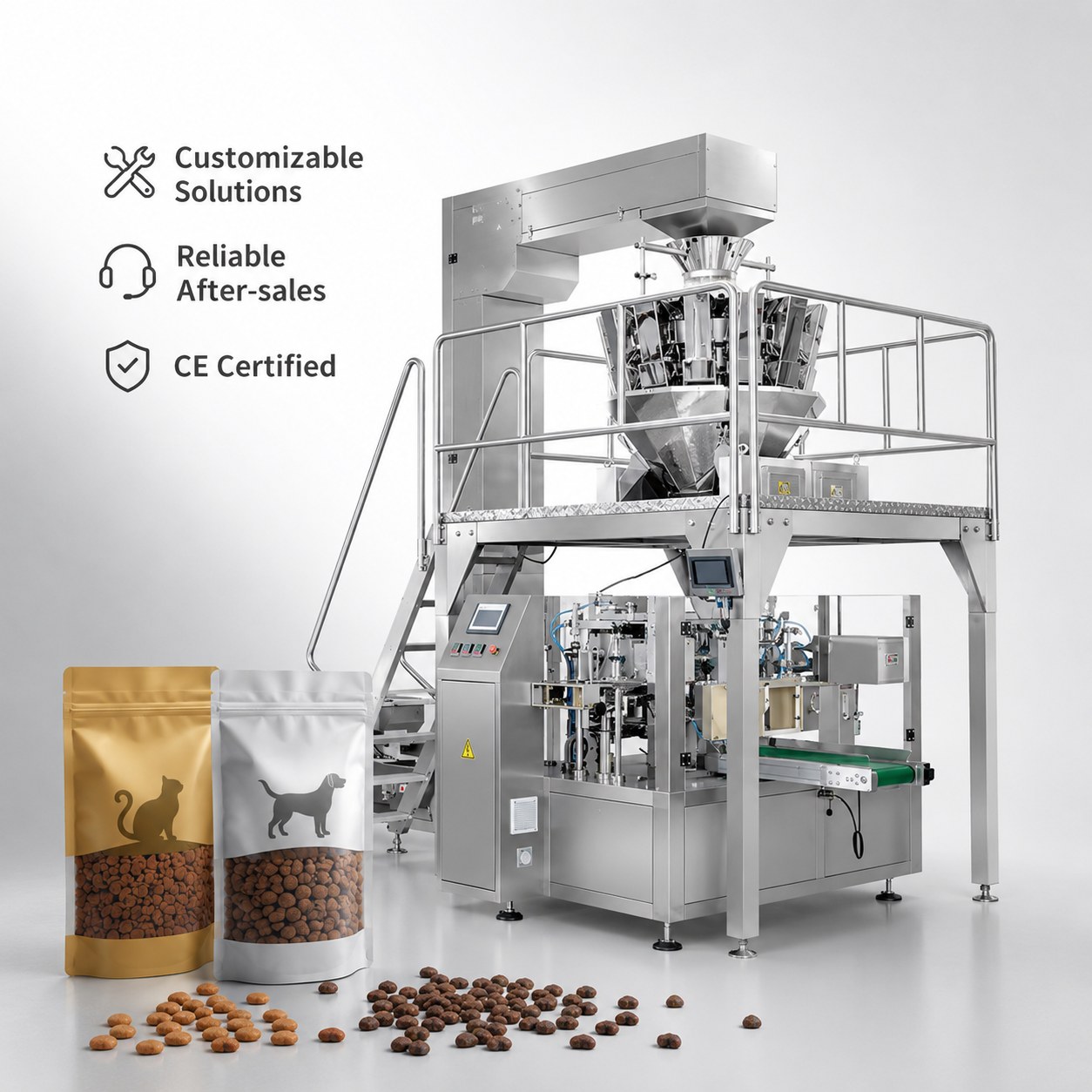
Upgrade when your starter machine runs full shifts and orders still wait. A full line adds automatic feeding, weighing, and case packing in one pass. Plan the upgrade early, because a full line needs floor space, power, and weeks of lead time.
Safety decides whether a buyer reorders. Good pet food packaging solutions use hygiene, seal strength, and oxygen control to protect every bag you ship.
Food-grade contact surfaces are the baseline for any pet food line. Stainless steel parts and tool-free strip-down cut cleaning time between recipes. A clean machine also stops flavor from one recipe leaking into the next.
Powder and crumbs in the seal area are the top cause of leaky bags. A dust extraction unit and a clean seal jaw keep every seal tight. Test each seal before a run, because one weak seal spoils a whole bag.
Oxygen turns fat rancid and shortens shelf life fast. A nitrogen flush pushes oxygen out of the bag before sealing. With a good barrier film and a tight seal, dry food stays fresh for months.
The machine price is only part of the cost. In pet food packaging solutions, changeover, giveaway, and scale-up decide what your first line really costs.
Every recipe change stops the line for cleaning and size adjustment. A typical changeover on a starter line takes 15–30 minutes, so plan batches by recipe. Fewer changeovers per week mean more bags per shift.
Giveaway is the product you pay for but never sell. A multihead weigher holds each bag close to target weight and cuts giveaway below 1%. Check filled bags on a scale every hour to catch drift early.
Sales growth turns a starter line into a bottleneck. Add a second machine or a faster weigher before the line runs out of hours. A line with 5–10% spare capacity absorbs a sales spike without a shutdown.
Start with your product form, pick the pack your buyer trusts, and run a starter line for your first order. When sales grow, scale the line with LINK Machinery.
1. What pet food packaging solutions suit a new brand?
Start with a semi-automatic VFFS for dry food in pillow bags, then add a premade pouch machine for premium lines. A starter unit typically runs 10–30 bags per minute.
2. Can pet food packaging solutions pack dry food and treats on one line?
Yes, if both products share one bag size and one seal type. Change the recipe, clean the line, and run a 15–30 minute changeover between batches.
3. How do pet food packaging solutions keep powder out of the seal?
A dust extraction unit clears the seal area, and a clean seal jaw closes each bag tight. Test seals at the start of every run to catch weak seals early.
4. What speed do pet food packaging solutions need for a first run?
A starter line at 20 bags per minute fills 1,200 bags per hour. That fills 10,000 bags in about 8 hours of running time.
5. How long do pet food packaging solutions keep dry food fresh?
A sealed multi-layer bag with a nitrogen flush keeps dry kibble fresh for months. Store bags in a cool, dry place below 25°C and out of direct sun.
6. When should pet food packaging solutions move to full automation?
Move up when your starter line runs full shifts and orders still wait. A full line adds automatic feeding, weighing, and case packing in one pass.

E-mail : Molly@xmlk-machine.com
Envoyez-nous un email
Room 810, No. 35-2 Xinjing Road, Haicang, Xiamen, Fujian, China
Notre adresse
Tél : +86 18150150881
Whatsapp : +8618150150881
appelez-nous


 français
 English
 português
 ไทย
